One of the buzz phrases we’re hearing more and more these days is BIM.
As buzz phrases go, it’s very short. However, it seems it will have a long shelf life over the months and years ahead. BIM isn’t going away. It’s getting big.
So why all the fuss about BIM, or in full, Building Information Modelling? Isn’t it just designing buildings on computers in 3D instead of using 2D drawings?
Well, it does involve that. But as the experts are keen to point out, BIM isn’t a technology – it’s a process. In other words, it represents a whole different approach to the process of design, construction and maintenance of buildings.
The industry has been moving in this direction for some time, and now government organisations are getting in on the act – because they have realised how much of their budgets can be saved by making BIM mandatory for taxpayer-funded projects.
In April 2014, the European Union Public Procurement Directive (EUPPD) came into force. This directive covers many aspects of public procurement and is designed to make the rules regarding government purchasing contracts simpler and more flexible. Within the directive is the suggestion that, “for public works contracts and design contests, Member States may require the use of specific electronic tools, such as building information modelling tools or similar”.
The EU is not making the use of BIM mandatory, but it is doing all it can to encourage individual governments to increase its use on public sector building contracts. This could include governments making laws to require it, as is already the case in the Netherlands, Denmark and Sweden, where all new taxpayer-funded projects now have to use BIM from the start.
In Britain, the government has set a target date of 2016, by which all government construction projects should be using a fully collaborative 3D computer model. It has even set up a specific BIM Task Group, with a representative of this team based in the Cabinet Office.
For governments, cost saving is a major factor. According to the European Commission’s own figures, implementing e-procurement methods on a construction project saves between 5 and 20% on expenditure.
However there is also the wider effect of boosting the construction sector, which is always very influential on the performance of the economy as a whole. The EU also believes that BIM will help make it easier to design sustainable buildings.
With a BIM project, the design team – architects, surveyors and other specialists such as building service engineers – can collaborate on the design, even remotely. But the real power of BIM is that it enables the construction team to be involved before physical construction takes place.
The term “build four times” is often used: in other words, the building is constructed three times virtually in the model before being built for real. This enables the vast majority of alterations and rework to be avoided, because these issues have already been addressed in the virtual model.
A key element of BIM is that the modelling of the building is parametric. In other words, everything is linked. So for example, if an internal wall is added or removed, the amount of materials required and the associated cost is adjusted automatically.
The virtual model also enables construction times to be estimated, which in turn makes it easier to schedule the delivery of incoming materials.
BIM allows very detailed and precise cost calculations to be made, and this is another reason why it is advantageous from a budgeting point of view.
Another aspect is that it enables calculation of energy efficiency. So, for example, a part of the building may not have a sufficient level of thermal efficiency. In the computer model, various alterations can be tried out: more insulation, different glazing in the windows, different window sizes etc.
Sustainability targets can also be achieved by monitoring exactly how much of a specific type of material is used in the building, to give one example.
An important aspect of BIM is that it is not just for the design and build stages. The computer model, which details the project exactly as finally constructed, can be used by facilities management and asset management over the lifetime of the building. For example, they could zoom in on a window and find the details of the manufacturer or hardware supplier if spares or maintenance are needed.
The 3D model can also be used in future if, for example, modifications or extensions to the building are planned.
According to the UK government’s own strategy document, the use of BIM can reduce overall project times by up to 50% on both new builds and refurbishments. They also claim that the overall cost of a building, in terms of initial construction and ongoing costs over its lifetime, can be reduced by up to a third.
In 2012, McGraw-Hill Construction carried out a survey in the US in which they spoke to building designers, constructors and owners who had direct experience of BIM, in order to find out what they believed the benefits to be. A clear majority pointed to a reduction in conflicts and changes during the construction phase. Most also said that the overall quality of project delivery went up when BIM was used. Other benefits mentioned were the fact that BIM helps in planning the prefabrication of larger, more complex assemblies, and that it resulted in a better-performing final infrastructure.
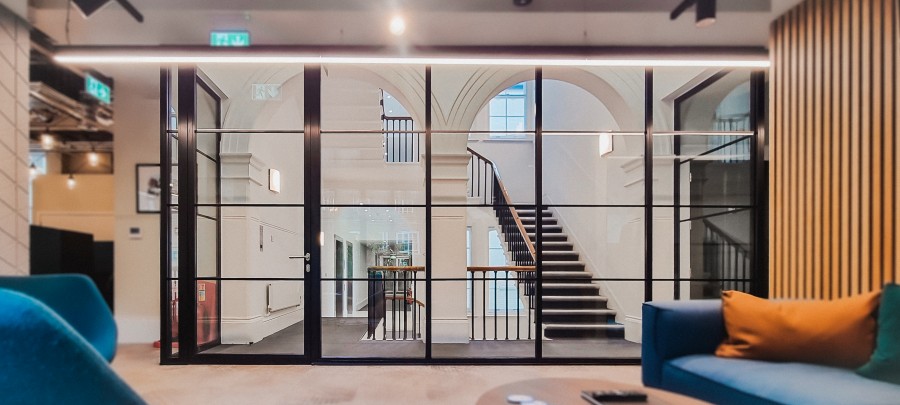
Many window companies, especially those who tender for public sector projects, are now offering downloadable BIM models of their windows and doors on their websites. It is a trend of which we can only expect to see more in future.