As 2025 begins, the profession's outlook for future work remains downbeat but is improving slowly.
The RIBA Future Trends January 2025 report shows that over the next three months, architects expect falling workloads, although the outlook is slowly improving.
Staffing levels are expected to fall as practices are increasingly cautious about recruitment, but staff numbers are reported to remain roughly the same as last year.
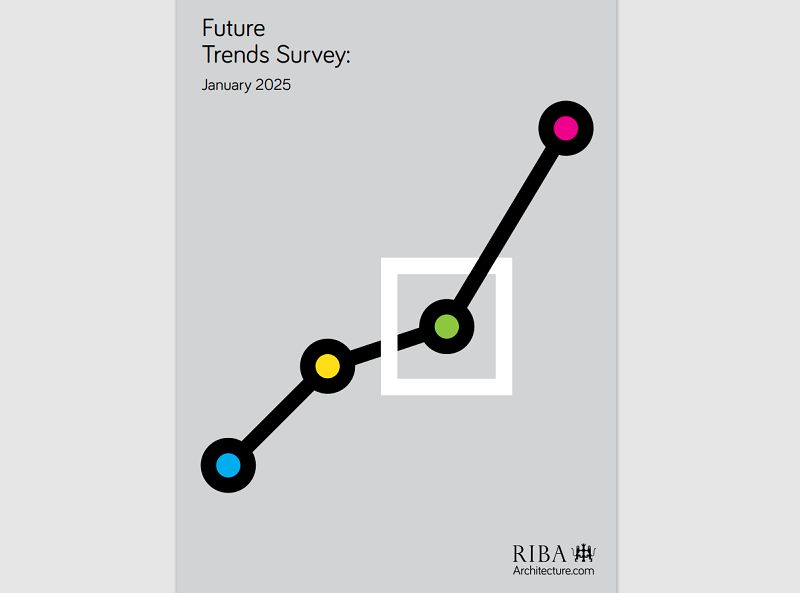
January's RIBA Workload Index rose three balance points to -2, following December's figure of -5.
Most regions have seen some improvement in outlook, with the capital becoming optimistic about future workloads. The outlook for the housing sector has improved, but all other sectors have deteriorated.
Adrian Malleson, RIBA Head of Economic Research and Analysis, said: "In the context of an under-performing economy and global uncertainty, the architects' market remains challenging. The profession remains pessimistic about future work.
“For the third consecutive month, the RIBA Future Workload Index is negative, indicating that practices continue to anticipate workloads falling in the near term.
“Most sectors and regions anticipate falling workloads. Expectations for future staffing levels are also negative, with practices reporting that coming changes in employer National Insurance Contributions (NICs) are dampening recruitment plans.
“Nevertheless, this month's report does provide some cause for optimism. The Workload Index has risen for the second successive month, workloads are expected to grow in the capital, the outlook for the housing sector is no longer negative, and staffing levels held steady through a difficult 2024.
“Commentary received from practices in January reflects a weak architectural market, with continued reports of intense fee competition, a lack of new enquiries, and insufficient work in the pipeline. The slow progress of planning applications still restricts project progress. Practices report planned increases in NICs making future recruitment less likely and lessening the scope for staff pay rises. Some are considering redundancies.
“Practices also describe policy and regulation changes negatively affecting workloads, including changes to the Building Regulations, the Listed Places of Worship VAT rebate Grant Scheme, and High-Risk Building procedures.
“Nevertheless, some practices describe thriving businesses, with some noting strong demand for office projects, ongoing work from established clients, growing opportunities overseas, and an anticipation of an improving market this year."