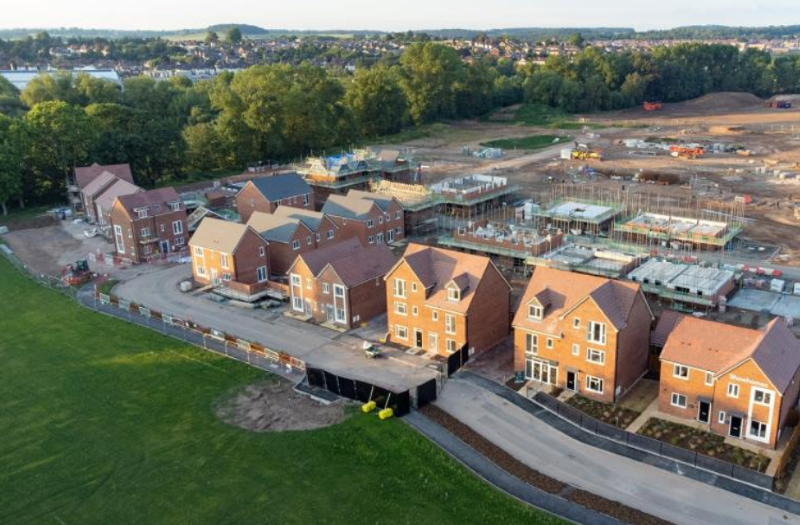
Robust viability testing will be essential to housing delivery as build costs and policy requirements continue to affect development margins, new research has found.
The research, conducted by national planning and development consultancy Lichfields, finds that viability is critical to meeting the Government’s target of building 1.5 million new homes in England during this parliamentary term.
The second edition of Fine Margins reviewed 144 viability assessments prepared since 2016 to examine how local authorities, developers and inspectors are assessing the financial viability of housing schemes across England and Wales.
It found that increased build costs and policy costs are not being matched by corresponding increases in Gross Development Values (GDVs), creating a need for careful assessment of viability, particularly on more marginal schemes.

Between Q3 2021 and Q3 2025, BCIS data showed build costs increasing by 21.8%, compared with average sales value growth of 13.1%.
Since Lichfields’ first Fine Margins research in 2021, a series of policy changes with cost implications has also been introduced, including Biodiversity Net Gain, nutrient neutrality, sustainability requirements and updated Building Regulations.
Further cost considerations will include the Building Safety Levy, which is due to be introduced in England from 1 October 2026. The levy will apply a per sqm charge averaging £30-£40 on most new residential developments, with discounts for many brownfield sites and exemptions for affordable housing, small schemes and specialist housing.
Simon Coop, Senior Director at Lichfields, said: “The Government’s housing target will only be achieved if development is viable. That means the costs associated with new housing must be properly understood, tested and kept under review.
“Many of the new requirements placed on development are important, but they also carry cost implications. Where those costs are not matched by increased values, it becomes even more important that robust viability assessments are undertaken, drawing on realistic, well-evidenced assumptions.
“Clear viability evidence helps local authorities and developers understand what can be supported, where flexibility may be needed and how policy requirements can be delivered alongside new homes.”
Affordable housing is one of the areas most closely linked to development viability, particularly where delivery relies on Section 106 contributions. In 2023/24, Section 106 contributions fully funded 45% of affordable homes delivered in England, down from an average of 48% over the previous five years.
The findings also show a high degree of consistency in many of the assumptions used in viability appraisals, giving a robust basis by which to respond to the requirement for standardised inputs to viability assessments.
Across the assessments reviewed, 95% used BCIS data as the basis for calculating build costs. For sales values, 67% of studies that provided details used HM Land Registry price paid data cross-referenced with Energy Performance Certificate records.
Developer profit assumptions were also broadly consistent. The most commonly applied margin was 20% of gross development value for market housing and 6% for affordable housing.
The findings come as proposed changes to the National Planning Policy Framework seek to bring greater clarity to viability assessment, including the circumstances in which viability can be used to negotiate planning obligations and affordable housing requirements.
Simon Coop added: “A more standardised approach to viability testing should help reduce uncertainty, but it must retain enough flexibility to reflect the circumstances of individual sites.
“Complex sites, brownfield land and marginal markets often carry costs that cannot be captured properly through a broad assessment. Clearer inputs will be helpful, but they need to sit alongside the ability to recognise real site conditions.
“Viability testing has never been more important. In the context of changing costs and policy requirements, getting the assumptions right will be essential to supporting housing delivery and helping local authorities, developers and landowners make informed decisions.”
The full Fine Margins research is available to download here.