By Tony Gordon, Managing Director, Showersave
The Future Homes Standard represents one of the most significant shifts in housing design and specification in recent decades. Across the sector, housebuilders, architects and housing providers are adapting to a future increasingly shaped by low-carbon heating, improved fabric performance and higher standards of energy efficiency.
Much of the discussion has understandably focused on technologies such as heat pumps and solar PV. However, as we move closer to implementation, there is another area of building performance that deserves greater attention: domestic hot water.
Historically, space heating has been the dominant energy demand within homes. As building fabric standards have improved, that balance has started to change. In highly efficient dwellings, domestic hot water is becoming one of the largest contributors to household energy use, yet it often receives far less attention during the design and specification process.
This presents an important challenge for the industry. If the objective is to create homes that perform well in the real world as well as on paper, we need to consider not only how energy is generated, but also how efficiently it is used.
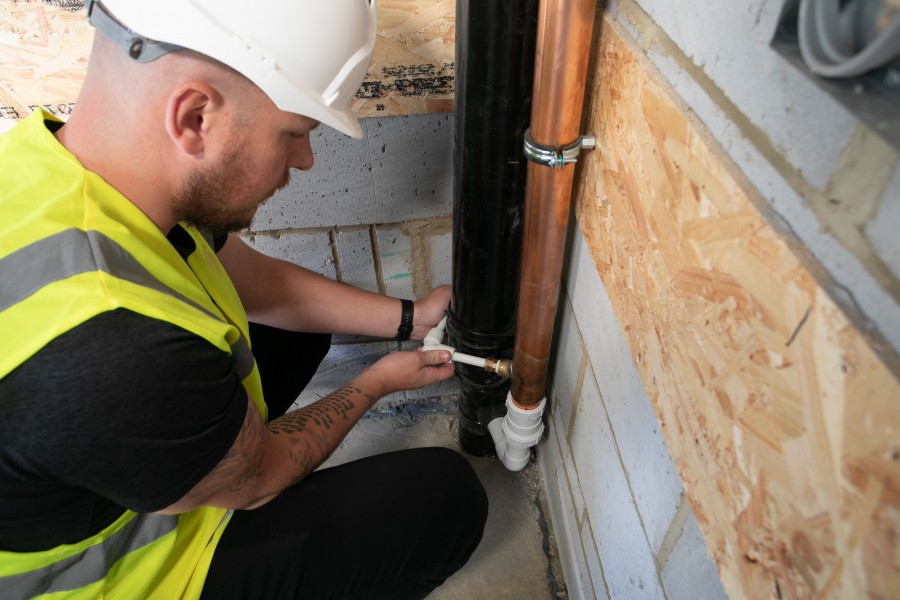
Over the past few years, Waste Water Heat Recovery Systems (WWHRS) have become an increasingly common feature in new-build housing. Tens of thousands of homes have been fitted with Showersave systems since 2024, reflecting the role these technologies play in helping developers meet energy performance requirements while reducing energy demand associated with hot water use.
The principle is straightforward. Rather than allowing heat from shower wastewater to disappear down the drain, WWHRS recover a proportion of that energy and use it to pre-heat incoming cold water. The result is reduced demand on the home's hot water system without requiring any change in occupant behaviour.
What concerns many within the sector is that evolving compliance methodologies may unintentionally place less emphasis on demand-reduction measures such as these. While flexibility remains within the system, there is a growing perception that compliance pathways are becoming increasingly concentrated around a relatively narrow group of technologies.
This matters because every development is different. Site constraints, budgets, dwelling types and infrastructure considerations all influence specification decisions. One of the strengths of previous regulatory approaches was that they allowed designers and developers to balance different measures to achieve the required outcome.

As the industry prepares for the Future Homes Standard, maintaining that flexibility will be important. A broad mix of technologies gives specifiers more opportunities to deliver cost-effective compliance while also supporting long-term building performance.
The conversation should not be framed as heat pumps versus hot water efficiency, or generation versus demand reduction. Both have a role to play. The most effective homes of the future will be those that combine low-carbon energy generation with measures that reduce energy demand from the outset.
For housebuilders, housing associations and local authorities alike, the challenge is not simply delivering compliance at handover. It is delivering homes that continue to perform efficiently for occupants over the decades that follow. As domestic hot water becomes a larger proportion of household energy use, it is a conversation that the industry can no longer afford to overlook.
To learn more about how Showersave WWHRS can support your next project, visit www.showersave.com, call 028 9334 4488 or email sales@showersave.com.