The rollout of autonomous vehicles, set to begin in London as early as September, could place pressure on the UK’s planning systems “unlike anything they have handled before”, according to a new publication from the Royal Town Planning Institute and the Institute for Driverless Transportation (IfDT).
Three autonomous ride-hail “robotaxi” providers are planning to launch commercial services in London this year, providing the UK with more driverless vehicle operators than almost any other market outside the US, China and the United Arab Emirates. One firm, Waymo, is already testing more than 100 cars in the capital.
In a new primer paper for planners, the RTPI and IfDT warn that the rollout of autonomous vehicles (AVs) will place new pressures on local planning authorities, who should already be considering the rapid rollout of driverless cars.
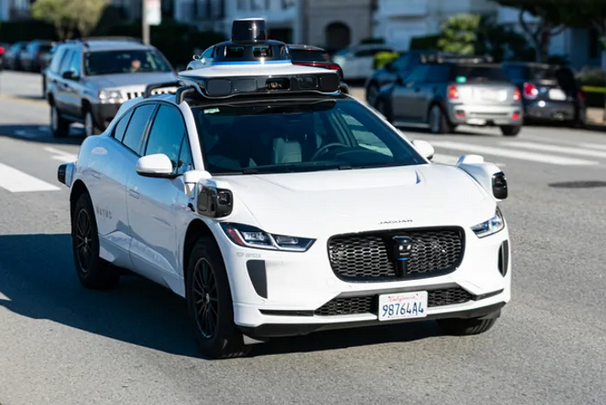
The paper argues that planners must consider the potential implications of AVs for economic development, public health, community life and the environment, if the UK is to ensure the new technology shapes the built environment in the public interest.
However, the Institutes warn that, without careful planning, AV deployment could risk reinforcing car dependency, enabling sprawl, and diverting attention from walking, wheeling and public transport.
Some scenarios for the rollout of AVs, cited in the primer, see neighbourhoods and city centres becoming driver-free, though not car free, within the next decade. The reduction in cars per household, would have big consequences for parking and preferred transport options.
For now, planners should be considering how their plan policies, transport strategies and guidance can influence the deployment of services and infrastructure like depots and charging infrastructure.
Dr Daniel Slade, Head of Research and Practice at the RTPI, said: “Planners have a vital role in making sure driverless vehicles are deployed in the public interest, delivering environmental, social, health and community benefits as well as economic ones.
“We could see significant changes in just a couple of years’ time, whilst the plans that planners are currently working on may be in place for 15 years or more. They will need to plan for the future and prepare places with these considerations in mind, while also not being beguiled by new technology. Walking, wheeling and public transport must remain the priority for health, communities and the environment.”
Tym Syrytczyk, Co-Founder of IfDT, said: “Working with the RTPI has been a valuable opportunity to help planners engage with, and shape, the impact autonomous vehicles could have on our towns, cities and everyday lives. By exploring the implications of this emerging form of transport early, planning professionals have a much better chance of influencing the kinds of services that develop, how they interact with the built environment, and how they are experienced by communities.
"We would encourage everyone involved in planning and place-making to start thinking about these questions now, before services become established at scale, shaped mainly by commercial priorities, and the options for public policy and planning response become more limited. Going forward, planners should test development decisions against a future where transport is increasingly autonomous and service-based. If people and goods move differently, we need to ask: does this still make sense to build?"
Planners do not need to wait for national planning policy to catch up to start preparing for AVs. Existing planning tools can already be used to shape how driverless transport is deployed and to ensure that environmental, social and economic benefits are fairly shared.