CIBSE in collaboration with Arup, Loughborough University and Inkling has launched the updated CIBSE TM59 Overheating risk in dwellings: A design stage methodology, providing the industry with revised guidance for assessing and mitigating overheating risk in new homes and major residential refurbishments.
Referenced within Part O of the Building Regulations, CIBSE TM59 is widely recognised as a key industry resource for evaluating overheating risk in residential buildings.
The updated publication reflects the latest research, industry experience and evolving understanding of how homes can be designed to remain comfortable and resilient in a warming climate.
The guidance comes at a time when overheating is becoming an increasingly important issue across the residential sector in the UK.
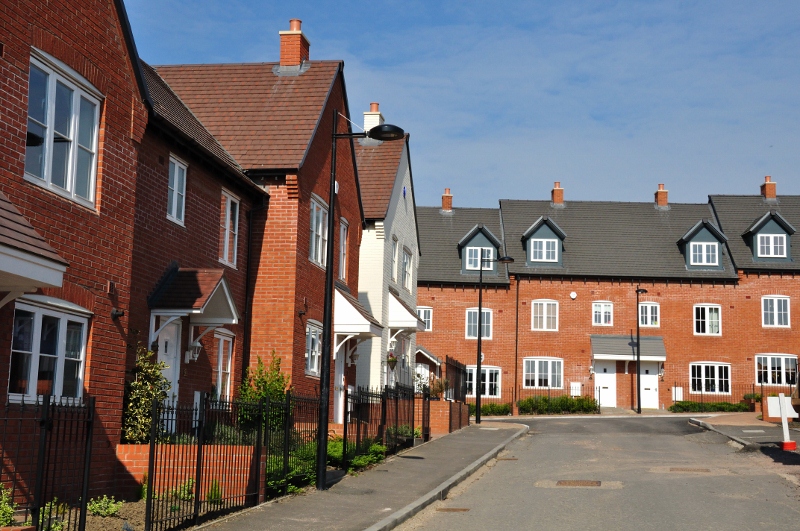
Evidence continues to show that many new and existing homes are vulnerable to excessive indoor temperatures due to factors such as extensive glazing, insufficient ventilation strategies and building designs that are not adequately adapted to future climate conditions.
Drawing on practical application and academic research, the revised CIBSE TM59 strengthens the methodology used to assess overheating risk and supports the delivery of homes that are resilient, energy efficient and fit for the future. The publication incorporates updated approaches to evaluating bedroom overheating, informed by recent research undertaken by Loughborough University and includes revised modelling guidance for ceiling fans, recognising their role as an effective low-energy measure for improving occupant comfort. The development of the updated guidance has also benefitted from industry testing and application across real projects.
A key enhancement within the new edition is the requirement for all homes to be assessed under unconstrained conditions using future weather files representing the 2050s climate. This approach places greater emphasis on passive design measures at the earliest stages of development, helping designers create buildings capable of maintaining comfortable internal conditions without relying on energy-intensive cooling systems.
The updated guidance is expected to strengthen design stage decision making, improve consistency in overheating assessments and support the delivery of homes that are resilient to future climate conditions while reducing reliance on energy intensive cooling.
The publication has relevance across a wide range of sectors and disciplines, including residential design, natural ventilation, building performance, sustainability, retrofit and refurbishment, climate resilience and government policy.
The guide was authored by Susie Diamond of Inkling (Lead Author), Becci Taylor and Antonietta Canta of Arup. The publication was executive edited by Professor Kevin Lomas of Loughborough University.
Ahmed Hegazi, Head of Knowledge and Digital at CIBSE, said: "Overheating is no longer a future risk – it's a present reality for households across the UK, and the built environment sector needs authoritative, evidence-based guidance to respond. This revision of CIBSE TM59 represents CIBSE at its best: rigorous research, a decade of practitioner experience, and a clear-eyed view of where regulation and design practice need to go. It gives industry and policymakers alike a robust foundation for delivering homes that remain safe, comfortable and resilient in a warming climate."
Becci Taylor, Director and UK Housing Property Lead at Arup, said: “When CIBSE TM59 was first developed, there was no consistent way to assess overheating risk in homes. This updated version builds on years of practical application, new research and industry insight in applying overheating assessments.”
Antonietta Canta, Associate at Arup said: “The updated CIBSE TM59 reflects our growing understanding of how buildings perform in a warming climate. It provides a standardised approach to assessing overheating risk to create homes that remain comfortable, resilient and fit for the future.”
Professor Kevin Lomas, Loughborough University, said: "The new version of CIBSE TM59 provides a blueprint for the assessment of overheating risk in new dwellings and dwellings subject to major refurbishment. The revision of CIBSE TM59 is set against the backdrop of Part O of the Building Regulations, which relies on CIBSE TM59 to define how models are to be used for overheating analysis. The revision incorporates the outcomes of recent research, some of which CIBSE funded - a new criterion defines overheating in bedrooms when people are sleeping, and ceiling fans are introduced as an effective passive means of comfort cooling. The new, more rigorously-defined assessment methodology, should improve the consistency and clarity of overheating analysis and reporting. Using the CIBSE TM59 methodology, dwellings in the UK, including in London, can be designed to stay comfortable using purely passive measures right up to the 2050s."