Mike Beaumont, Head of Technical Sales at wienerberger UK & Ireland, explores why designing for a changing climate means looking beyond winter heat loss and considering how buildings perform throughout the year.
In recent months, temperatures climbed above 30°C across much of the UK, prompting heat-health alerts and bringing the issue of overheating back into sharp focus. While extreme heat may once have been considered an occasional challenge, it is becoming an increasingly familiar feature of the UK's climate.
For the construction industry, this represents a significant shift. The buildings we design today will still be occupied in 2080, a time when more frequent, longer-lasting and more intense periods of hot weather are expected to become increasingly common. The question is no longer whether buildings will experience extended periods of elevated temperatures, but whether they are being designed to cope with them.
For decades, improving building performance has largely centred around reducing heat loss during winter. Better insulation, improved airtightness and more efficient heating systems have helped deliver significant progress in energy efficiency and carbon reduction, all of which remain fundamental principles of good design.
However, as our climate evolves, the conversation must also extend to how the building envelope responds to summer heat. Clay brick has long been valued for its durability, fire performance and architectural character, but its thermal performance is becoming an equally important part of the specification decision. As our climate evolves, so too must our understanding of building performance, meaning tomorrow's buildings need to perform in tomorrow's climate, balancing warmth in winter with comfort during increasingly hot summers.
A broader definition of building performance
The introduction of Part O of the Building Regulations marked an important step in recognising overheating as a design consideration rather than simply an operational issue. At the same time, architects and specifiers are placing greater emphasis on occupant wellbeing, climate resilience and operational performance throughout the entire year.
This represents a subtle but important change in mindset. Building performance is no longer defined solely by how effectively a building retains heat, but also by how well it manages unwanted heat gain.
Achieving this requires a holistic approach including orientation, glazing design, shading, natural ventilation and insulation – all of which have an important role to play. However, material choice also deserves greater attention. The way an external walling system responds to changing temperatures can help improve summer comfort, reduce overheating risk and support lower-energy design strategies.
Looking beyond U-values
When discussing thermal performance, U-values often dominate the conversation. They remain an important measure of how effectively a building element limits heat transfer under steady-state conditions and continue to play a vital role in demonstrating compliance.
While steady-state calculations remain useful for assessing certain aspects of building performance, buildings do not operate under steady-state conditions in practice. External temperatures fluctuate throughout the day, solar gains vary by season, and occupancy patterns continually influence internal conditions. Understanding how materials behave under these dynamic conditions is becoming increasingly important, particularly when assessing overheating risk and summer comfort. This is where dynamic thermal performance comes into its own.
Materials respond differently to changing temperatures, with lightweight construction systems generally reacting more rapidly to external heat gains, while heavyweight materials absorb, store and release heat more gradually.
Rather than allowing external heat to move rapidly indoors, materials with higher thermal mass absorb and store heat before releasing it more gradually as external temperatures begin to fall. This helps reduce peak internal temperatures and creates opportunities to remove stored heat naturally through measures such as night-time ventilation.
The principle of thermal shielding is particularly relevant when heavyweight materials lie outside the insulation layer. This allows clay brick to absorb significant amounts of heat as external temperatures rise, before substantial heat flow is driven further into the building. In practical terms, this means an external brick skin can help delay and soften the impact of peak daytime heat.
Putting the building fabric to work
As the industry seeks to reduce operational energy use, passive design strategies are becoming increasingly valuable. Every opportunity to minimise reliance on mechanical cooling not only reduces energy demand but also improves resilience should external conditions become more challenging.
This is why material selection is becoming an increasingly important part of the conversation.
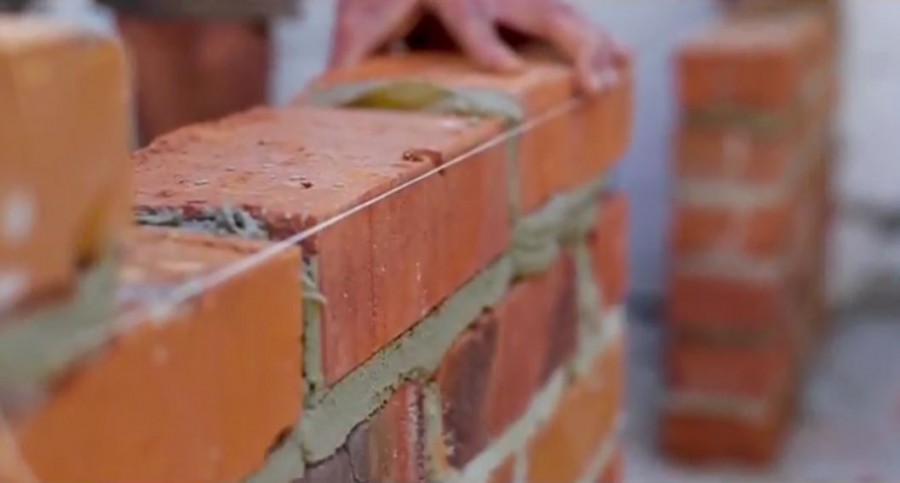
Clay bricks, for example, offer more than durability, fire performance and aesthetic appeal. Their thermal capacity enables them to absorb heat during the hottest part of the day and release it gradually over time, helping reduce internal temperature fluctuations in the building and create more stable conditions. When incorporated within a wall construction, external brickwork can delay peak heat transfer by several hours, supporting passive cooling strategies and improving occupant comfort.
One of the most useful ways to understand this is through decrement delay – the time lag between peak temperatures on the outside of a wall and those experienced on its inside face. Medium and heavyweight walls insulated to current standards can slow heat transfer by around nine to 12 hours, helping to control overheating and making massive measures such as ventilation and night cooling effective.
Importantly, this should not be viewed in isolation as no single product prevents overheating. Instead, successful buildings combine carefully considered orientation, glazing, ventilation, shading and building materials to create a fabric-first approach that works with, rather than against, the climate. Within that wider approach, clay brick can make a meaningful contribution to summer comfort as part of the overall wall construction.
Designing for decades, not just today
Perhaps the greatest challenge facing architects and specifiers is that the decisions made today will shape building performance for generations.
Climate resilience can no longer be treated as a future issue but one that needs to be considered today. The homes, schools, hospitals and commercial buildings currently on the drawing board will need to perform in a climate that is already changing. Designing solely to meet today's conditions risks creating buildings that require increasing levels of mechanical intervention simply to remain comfortable in the decades ahead.
Instead, we should view the building fabric as one of our most effective long-term assets. For example, clay brick walling systems that help regulate indoor temperatures naturally can contribute to lower operational energy demand, improved occupant wellbeing and more resilient buildings for future generations. It is this ability to support both winter efficiency and summer comfort that will become increasingly important as our climate continues to evolve.
The industry has already made tremendous progress in improving energy efficiency, and that work must continue; however, as our climate changes, the definition of good building performance is evolving too.
Tomorrow's buildings need to do more than keep heat in during winter - they must also help keep unwanted heat out during summer. By taking a fabric-first approach and considering how clay brick walling systems, alongside other building materials, perform in real-world conditions throughout the year, architects and specifiers can create buildings that are not only compliant today, but resilient, comfortable and fit for the climate of tomorrow.
www.wienerberger.co.uk