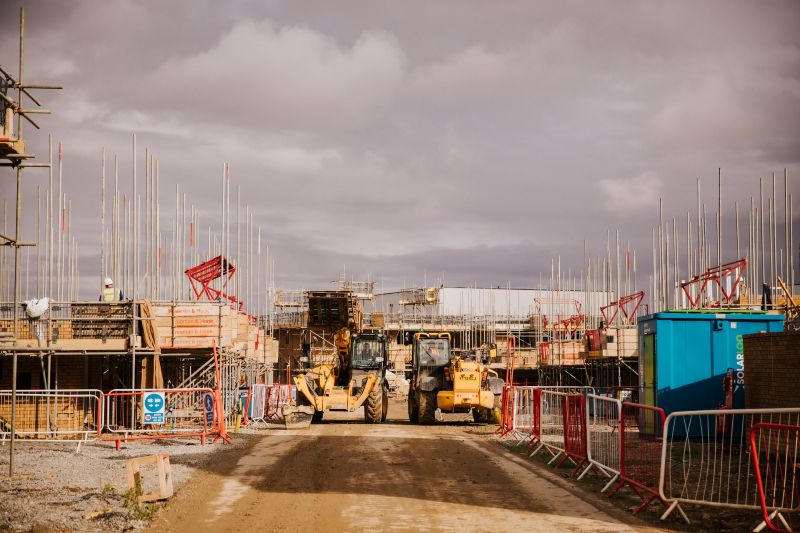
Homes converted from non-residential buildings in England under relaxed planning rules are often substandard and poorly located, leading to health issues for their residents, finds a report led by UCL researchers.
The study, published by the UCL Bartlett School of Planning, is the most comprehensive analysis of homes created under “Permitted Development Rights” (PDR) in buildings not originally designed to be residential properties.
They found that 76.5% of residents reported at least one housing quality issue and about 40% of converted homes are close to potential sources of noise and air pollution, likely contributing to shorter lifespans and higher rates of physical and mental illness. Air pollution and carbon dioxide levels exceeded safe World Health Organisation guidelines in 40 out of 42 of homes monitored by the team.
Additionally, the poorest quality PDR homes tend to be occupied by some of the most disadvantaged people, further compounding heath and socioeconomic inequalities.
Permitted Development rights were introduced in England in 2013, removing local authority control over office-to-flat conversions, unless there are demonstrable concerns about issues such as flooding or contamination.
The UCL researchers are recommending a repeal of this legislation and return to full planning permission being required for conversion, or at least a substantial revamp of current rules to encourage homes that promote good health.
Lead author Professor Ben Clifford (UCL Bartlett School of Planning) said: “There is a deep, important link between housing and health. Where you live can make a significant difference to your health and wellbeing. Our research shows that the planning deregulation that led to these converted properties has led to a large quantity of substandard housing which risks the health of their residents as a result.”
Permitted Development Rights homes
To increase England’s housing supply, in 2013 the Government first changed planning laws to expand Permitted Development Rights to allow the conversion of offices into housing without the need for full planning permission. This was expanded two years later with the Town and Country Planning (General Permitted Development) (England) Order 2015, known as the GPDO 2015 (PDR) to include retail spaces, agricultural buildings and other non-residential properties.
The team identified over 77,000 new homes created in refurbished buildings across the country, finding the quality of the housing varies considerably.
Most of these homes (84.9%) are in converted office buildings. PDR homes are prevalent in most London boroughs and other major cities such as Birmingham, Bristol and Leicester, as well as throughout southeast England, particularly Slough, Crawley, Harlow and Reading.
The researchers found that this deregulation has led to housing in locations that exposes residents to environmental risks, while limiting access to important amenities. Converted offices and retail spaces often have small internal volumes, open-plan layouts, restricted windows and limited cross ventilation, characteristics commonly that lead to poor indoor environmental conditions.
Environmental conditions
One of the biggest impacts is poor air quality and pollution. The deregulation has allowed homes to be located next to industrial facilities, vehicle repair shops, waste management facilities and night-time economy services, or within 50 metres of a busy A-road or motorway.
Air pollution and carbon dioxide levels from these pollution sources exceeded safe World Health Organisation guidelines in 40 out of 42 of homes monitored by the team.
In addition, 30% of the homes experienced concerning overheating during the hot summer months. During the winter, 70% experienced some degree of underheating, which, combined with high rates of humidity also observed in some of these homes, creates the conditions for damp and mould growth.
Case study: health and wellbeing impacts
These poor environmental conditions affect residents’ health and wellbeing. Using the city of Bradford as a representative case study, data analysis showed residents who moved into PDR housing visited their GP 50% more often than before they moved.
Models by the research team at the London School of Hygiene & Tropical Medicine predicted the health impacts of these environmental issues. They show the conditions are contributing to higher rates of cardiovascular disease, respiratory disease, asthma and premature death nationally. Excess air pollution in small office-to-residential conversion flats (about 30% of overall PDR housing) results in 28.8 excess deaths and 100.8 asthma cases per 10,000 residents, leading to a total of 5,644 years of life lost and a £413 million annual economic loss in total across the country.
Residents of low-quality PDR homes also suffered from poorer mental health. The team found that 22% of residents surveyed in PDR homes showed signs of probable depression, a rate higher than the national average of 16%. This poor mental health was most often experienced by individuals who reported shortages of space (reported in some way by 44% of respondents), uncomfortable temperatures (reported by 45% of respondents) and frequent noise disturbances (reported by 36% of respondents).
Poor quality PDR housing tended to be concentrated in deprived areas and occupied by people of lower socioeconomic status with few housing choices, the UCL team found. As a result, the health impacts of poor-quality PDR housing are contributing to the widening of existing health inequalities, they said.
These issues are compounded by the fact that some of these homes are located in areas not originally intended to be residential areas, leading to isolation from essential services including healthcare, schools and public transport, they added.
Policy implications
The authors stressed that while they observed a range of different issues associated with poor quality PDR housing, the problems stemmed from the removal of important planning process regulations, rather than being inherent to building conversions.
In addition to recommending a repeal of the GPDO 2015 (PDR) and return to requiring full planning permission for conversion, or at least a substantial revamp of current rules to encourage homes that promote good health, the researchers are calling for the government fund a full review and retrofitting programme for existing PDR housing to ensure their safety and habitability.
Rosalie Callway, Projects and Policy Manager at the Town and Country Planning Association which collaborated on the study, said: “This report lays bare what happens when planning rules are stripped away: thousands of families and vulnerable individuals living in unsafe and poorly insulated flats in polluted areas - directly harming their physical, mental and social health.
“Everyone agrees the country needs more homes. But they need to be the right homes, in the right places and of a quality that gives people a firm foundation to build healthy, secure lives.”
This research was funded by the National Institute for Health and Care Research and involved researchers from UCL, London School of Hygiene & Tropical Medicine, the TCPA and Groundswell.