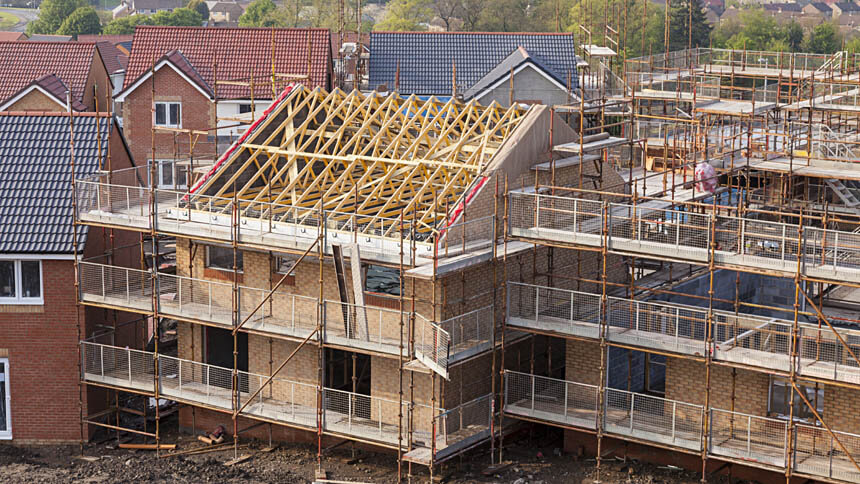
As the construction industry intensifies its focus on embodied carbon, material efficiency is becoming an increasingly important consideration in building design.
For light steel frame, the opportunity extends beyond the material itself. How a structure is designed, manufactured, transported and installed can have a significant influence on its environmental and economic performance.
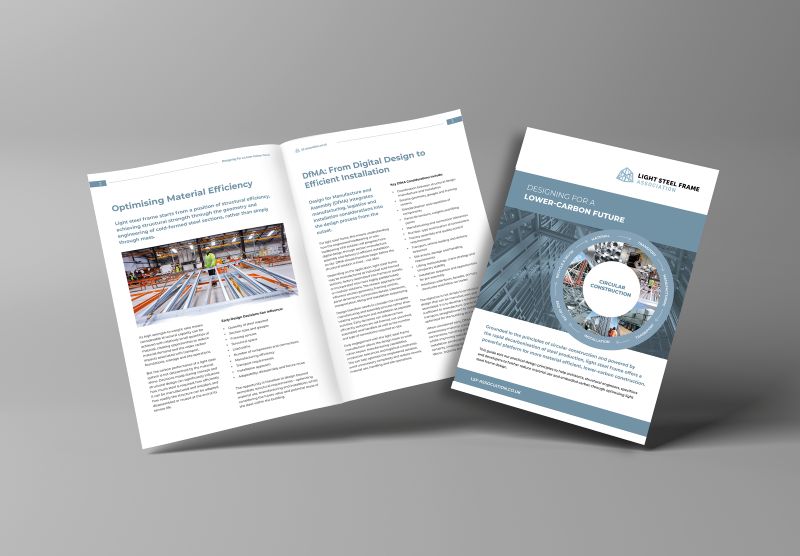
In the LSFA’s latest technical guide, ‘Designing for a Lower-Carbon Future’, it explores practical ways to reduce material use and associated embodied carbon through informed design decisions made early in the project.
“Light steel frame achieves structural strength through the geometry and engineering of cold-formed steel sections, rather than relying simply on mass,” explained Chair of the Light Steel Frame Association, Ben Towe. “Its high strength-to-weight ratio creates opportunities to meet structural requirements with relatively small quantities of material, potentially reducing associated transport, foundation and installation demands.
“However, maximising these benefits has to be considered. Section sizes, steel gauges, framing centres, structural spans and load paths all influence the quantity of material required. Over-specification, unnecessary reinforcement and poorly coordinated layouts can introduce additional steel without delivering a proportionate structural benefit.
“Designing for material efficiency means selecting sections according to actual structural demand. Where heavier gauges or local reinforcement are necessary, these requirements should be targeted rather than routinely applied throughout the building.
“The same principle applies to the structural grid. Aligning loadbearing walls and supports, establishing clear load paths and coordinating openings with the framing layout can reduce transfer structures, additional posts and complex connections. The objective is to design the structure to work with the building, rather than adding steel to compensate for an inefficient layout.”
Design for Manufacture and Assembly (DfMA) is central to this approach. By considering manufacturing capabilities, logistics and installation requirements from the outset, design teams can develop solutions that are efficient to produce, practical to transport and straightforward to assemble on site.
“Early engagement with light steel frame manufacturers is crucial,” he continued. “Their expertise can help identify opportunities to rationalise sections, standardise components and simplify connections, while accounting for production tolerances, panel dimensions, lifting requirements and installation sequencing.
“Coordination is equally important when integrating building services. Establishing service zones, digitally coordinating penetrations and using manufacturer-approved openings can prevent structural members from being modified or strengthened later to accommodate mechanical, electrical and plumbing (MEP) requirements.
“These decisions help avoid unnecessary material, rework and site activity, while supporting manufacturing quality, installation productivity and programme efficiency.”
The objective is not simply to use less steel, but to use it more intelligently — delivering buildings that meet the required performance criteria while reducing material demand, avoidable carbon emissions and project costs.
To download the guide and connect with specialist light steel frame manufacturers, visit: www.lsf-association.co.uk