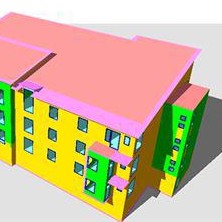
Mitsubishi Electric and leading thermal simulation software developer Environmental Design Solutions Limited (EDSL) have been working together to deliver an advanced software package that will help designers, developers, installers and building operators see the direct energy implications of the type of heating, cooling and ventilation equipment they choose to install.
ESDL’s Tas (Thermal Analysis Simulation) software is already widely respected amongst architects, specifiers and designers because it offers a highly intuitive interface that accurately analyses and predicts the thermal properties of a building’s design and will accurately predict the on-going energy consumption of individual buildings, based on real and localised weather data throughout the year’s varied climactic conditions.
The two companies have now come together to add the detailed performance data for the majority of Mitsubishi Electric’s air conditioning and heating products into the Tas software.
This now means that designers will be able to see the direct impact on energy of choosing actual systems and configurations, with the software including exact model details. The end results will also be accurate and robust enough to adhere to building energy labelling requirements.
“Mitsubishi Electric was completely transparent with the performance data given to us to include in the Tas programme which was an essential requirement in providing the accurate modelling and simulation results that our customers have come to rely on,” explains Alan Jones, EDSL’s managing director.”
At the same time, Mitsubishi Electric is releasing an update to its own popular Audit Tool software to enable customers to see the direct benefits of upgrading older air conditioning equipment.
“Both of these pieces of software give building designers the tools to accurately demonstrate the energy levels that individual equipment will have on a building,” comments Martin Fahey, sustainable solutions manager for Mitsubishi Electric. “This then allows installers and end users to clearly see the relative performance impact that one product or configuration can have over another.”
The Audit Tool demonstrates the energy and carbon saving potential of removing old air conditioning, upgrading it to modern, inverter-driven systems. The software will also clearly demonstrate when it makes sense to stick with existing equipment for the time being by highlighting the immediate and long-term financial benefits of upgrading or not.
Both developments are in line with Mitsubishi Electric’s drive to help everyone involved in the built environment to understand the impact of energy use in buildings.