Following the Scottish Government’s publication of its Heat in Buildings Strategy, BRE was commissioned by Scottish Enterprise to identify technical innovation opportunities in low carbon heating.
The research identified that there is great potential for innovation to bring down the high costs associated with low carbon heating technologies.
BRE found that the low carbon heating technologies with the potential for technical innovation were air source heat pumps, district heat networks, thermal energy storage and the utilisation of waste heat from industry.
The research identified technical innovation opportunities in:
- User-friendly and smart technologies for air source heat pumps
- Utilisation of waste heat to increase energy efficiency
- Alternative approaches to district heat networks which could reduce costs
The Scottish government’s Heat in Buildings Strategy indicated that there is a need to rapidly scale up the deployment of zero emissions heating systems. By 2030 over 1 million homes and the equivalent of 50,000 non-domestic buildings would need to be converted to zero emissions heat.
Designed to demonstrate new business opportunities for enterprise and value for consumers, our technical innovation needs assessment will help to build an evidence base to support local businesses overcome the innovation challenges in the development of low carbon heat solutions. The project also highlighted the need for increasing consumer awareness around low carbon heating technologies.
Colin Sinclair, Associate Director at BRE said: “Through our world-class research, BRE is playing a leading role in supporting enterprise in the journey towards net-zero.
Our innovation needs assessment identified that there is a need for user friendly and smart low carbon technologies and there is an opportunity to make greater use of waste heat.
“Our aim with this research for Scottish Enterprise is that it will create innovation calls, and subsequent research and development, in the areas identified and that this will spark innovative approaches to low-carbon heat technologies for the benefit of the sector and local communities.”
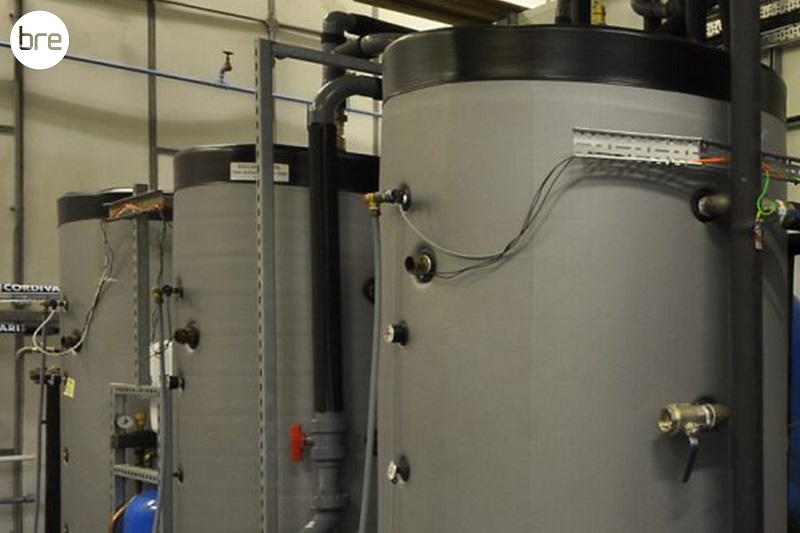
Air source heat pumps are commonly identified as offering potential for mass rollout. However, the review found that heat pumps could be improved with user friendly control systems, smart monitoring and thermal energy storage technologies, which would boost energy efficiency and wider adoption.
BRE’s research also identified that taking a different approach to the design and construction of district heating networks could create opportunities for technical innovation. The utilisation of waste heat and renewable energy sources was also recognised. Heat emitted as waste could be used in buildings and district heat networks.
BRE also identified that new tools and approaches could be developed, which would identify and measure heat waste from industrial processes such as power stations, water treatment plants, and other commercial buildings.
BRE has recently expanded its testing capacity for air source heat pumps due to an increase in consumer and market demand, following the publication of the UK Government’s Heat and Buildings strategy.
Read the full report.