A white paper has been published examining how the role of office entrance environments is evolving as hybrid working, changing occupancy patterns and workplace expectations reshape commercial buildings.
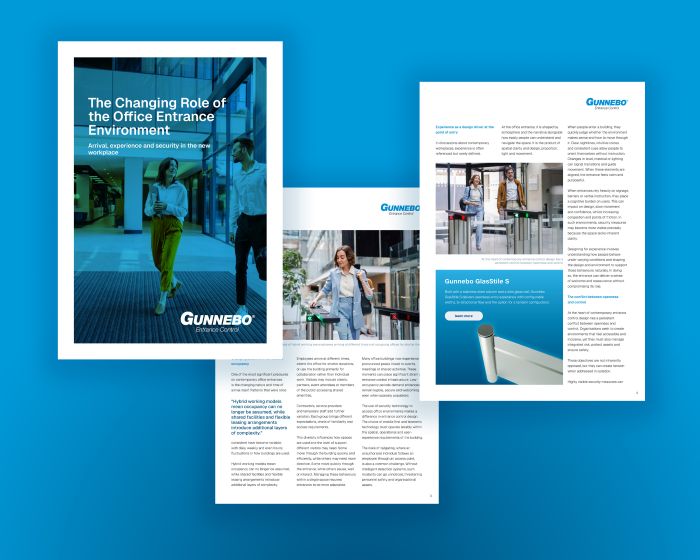
Entitled “The Changing Role of the Office Entrance Environment: Arrival, Experience and Security in the New Workplace,” the downloadable report explores how entrances are becoming increasingly smart spaces that must manage movement, access and user experience while aligning with contemporary architectural design.
Citing how employees now attend offices at different times and less frequently, while visitors, contractors and event attendees contribute to more varied and fluctuating occupancy.
As a result, entrance environments must accommodate multiple user groups and access requirements while maintaining clear, secure movement through the building, often to different company facilities held on the same site.
Tina Hughan, Global Marketing & Sustainability Director at Gunnebo Entrance Control and author of the white paper, said: “The entrance is where a wide range of users and activities come together. In many offices it is one of the few spaces used by everyone, and its smart design has a direct influence on how easily people move from arrival into the rest of the building. As working patterns become more varied, entrances need to support movement, clarity and security without disrupting the overall workplace experience.”
The study examines how entrances shape the workplace experience. Clear routes, intuitive layouts, and consistent design cues help people navigate spaces easily, reducing congestion and supporting both security and user confidence. When thoughtfully integrated, entrances can enhance daily operations and reduce reliance on signage or instructions.
The white paper also explores the balance between openness and control in contemporary office design. Organisations increasingly aim to create welcoming, collaborative environments while managing operational risks such as unauthorised access and tailgating.
The report additionally highlights how materials, lighting, and spatial flow influence perceptions of entrance control. By treating entrances as adaptable, long-term operational assets, organisations can ensure their design continues to meet evolving workplace needs.
Tina concludes: “Office entrances that perform well tend to do so quietly. When movement is clear, routes are intuitive and access is managed seamlessly, people can focus on their purpose for being in the building rather than the process of entering it. Designing entrances with such balance in mind entails consideration early in the design process to align with the building’s architectural intent. This allows organisations to support both experience and security as workplaces continue to evolve.”
The white paper is available to download from the Gunnebo Entrance Control website: https://bit.ly/GECCommercialOffices