A new National Audit Office (NAO) report examines the progress and evidence underlying the costed proposals for the programme to restore and renew the Palace of Westminster (the Palace) and assesses them against established practice to determine whether the programme is currently set up for success.
The Palace, a Grade I listed building within a UNESCO World Heritage site, requires extensive restoration to address serious risks, including failing mechanical and electrical systems, fire safety issues and high levels of asbestos.
The Restoration and Renewal Programme (the Programme) is intended to address these concerns.
The Programme is now at a critical stage, with parliamentary approval being sought to reduce the number of options from four to two.
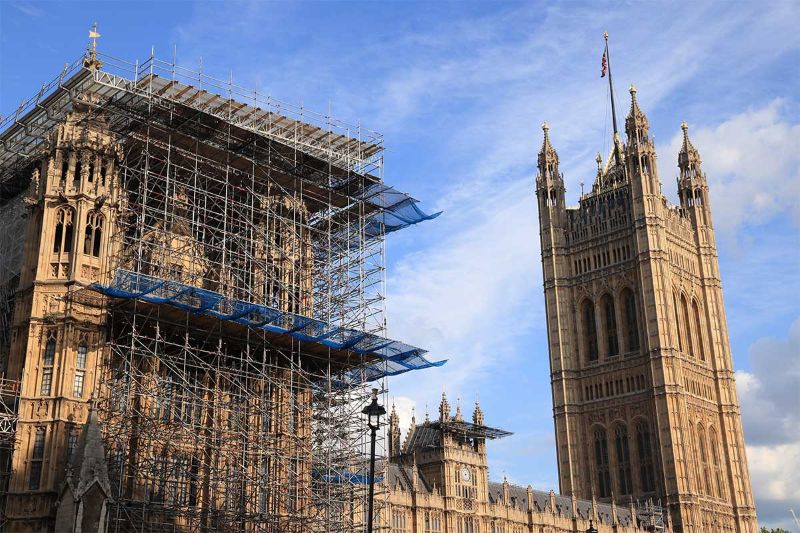
Image: Restoration and Renewal of Parliament - National Audit Office
The two recommended options are:
- Full decant: £11.1 billion to £15.6 billion, 19 to 24 years
- Enhanced Maintenance and Improvement plus (EMI+): £19.5 billion to £39.2 billion, 38 to 61 years
Building on its previous work, this new report by the independent public spending watchdog finds that further delaying the decision on which option to pursue carries risks to achieving value for money, with each year of delay adding between £320 million to £420 million to the overall cost of delivering the Programme.
Although the options and their underlying estimates have been through a standard process of development and have been subject to internal and external checks to examine and assure them, all are at an early stage and are likely to face cost and schedule pressures as designs develop.
The costed proposals provide enough information for a decision, although the EMI options are less developed and more uncertain.
The proposals also recommend that Parliament approves an initial seven-year programme of ‘Phase One’ enabling works capped at £3 billion.
Undertaking these works is a sensible approach, as this allows the Programme to progress while managing several risks. But plans for how the works will be overseen and delivered need to be finalised.
Suitable temporary accommodation is essential if the Houses are to decant and Parliament is to function properly. All Programme options depend on this accommodation being ready on time, but current risks could delay the move, particularly the full decant option.
The Programme must also strengthen its governance arrangements to be able to bear down on cost, schedule and scope; manage interdependencies across the Programme; and support Parliament’s decision on the final delivery option.
To put the Programme on a stronger footing, the NAO recommends that the responsible delivery teams:
- publish and regularly update a clear, non-technical summary, potentially alongside its business case, akin to Strategy and Delivery Plans used for mega-projects
- provide cost estimate ranges for all ‘Phase One’ work packages and set out how interdependencies between key projects will be managed
- ensure that links and decision-making responsibilities between projects across the Programme and related work on the Parliamentary estate are managed through a single, integrated delivery plan
- work with MPs and Lords at speed to create a clear vision for how each House, and Parliament as a whole, will operate in their temporary accommodation
- review the Programme’s governance arrangements to set clear requirements and hold those delivering to account